Frequently Asked Questions
The most-asked questions about european modernists.
What exactly is European Modernism as a movement?
European Modernism refers to the broad wave of artistic, literary, musical, and philosophical experimentation that roughly spanned the 1890s through the 1940s, in which creators across the continent deliberately broke with 19th-century conventions of form, representation, and narrative. It is not a single school but an overlapping cluster of related rejections of realism, linear storytelling, and academic tradition.
Who are the figures most associated with the movement?
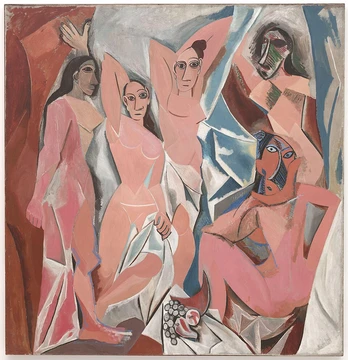
In literature, names like James Joyce, Virginia Woolf, Marcel Proust, and T. S. Eliot dominate; in visual art, Pablo Picasso, Wassily Kandinsky, Henri Matisse, and Kazimir Malevich are central; in music, Igor Stravinsky and Claude Debussy are frequently cited. In architecture and design, Walter Gropius, Le Corbusier, and the Bauhaus collective round out the canon.
Where and when did it actually begin?
Its roots trace to late-19th-century France—Impressionism, Symbolism, and early Post-Impressionism—before the center of gravity shifted to Paris in the 1900s and 1910s. From there it radiated to Vienna, Berlin, Zurich, London, and Barcelona, with each city developing its own local flavor.
What are the major sub-movements a newcomer should know?
Key branches include Cubism and Futurism in painting, Dada and Surrealism in poetry and performance, Expressionism in German theatre and film, stream-of-consciousness in the novel, and the International Style in architecture. They often overlapped in time and geography, so a single artist could straddle two or three of them.
What is the best single entry point for someone new to the period?
Readers often start with Virginia Woolf's Mrs Dalloway or T. S. Eliot's The Waste Land because they are shorter than Joyce's Ulysses yet still capture the movement's fragmented, interior focus. For visual art, a gallery visit centered on Picasso's early Cubist canvases or Kandinsky's abstract compositions provides an immediate, accessible contrast to representational painting.
What themes and ideas run through Modernist work across all media?
A preoccupation with subjective, often unreliable perception; the fragmentation of time and identity; the psychological aftermath of industrialization, war, and urbanization; and a formal commitment to making the structure of the work itself part of its meaning. Many Modernists also grappled with the limits of language and the possibility of genuine communication.
What is considered a pivotal 'moment' in the movement's history?
The 1913 Armory Show in New York, which exposed American audiences to European avant-garde painting, is often cited as the moment Modernism became a public phenomenon. In Europe, the 1916 founding of Dada in Zurich's Cabaret Voltaire and the 1925 Paris exhibition of modern decorative arts are equally frequently pointed to as turning points.
How does Modernism differ from the Romantic and Realist traditions it replaced?
Where Romanticism emphasized individual emotion within recognizable narrative and Realism aimed at objective social depiction, Modernism turned inward, fractured chronology, and treated form as a problem to be solved rather than a vehicle for content. The artist's role shifted from depicting the world to interrogating the very tools of depiction.
Which cities functioned as the main hubs, and why?
Paris dominated because of its publishing houses, galleries, and permissive artistic culture, drawing expatriates from across the continent. Vienna contributed psychoanalytic and musical innovation, Berlin provided a vibrant cabaret and film scene, and Zurich became a refuge for exiled artists during and after World War I.
What is Modernism's lasting influence on later culture?
Its experimental grammar—non-linear narrative, abstraction, self-referential form—became the default toolkit for 20th-century and contemporary art, literature, film, and architecture. Postmodernism, in many readings, is best understood as a reaction to and extension of Modernist assumptions rather than a clean break from them.